


Digital Memory: Before It Is Too Late
The digital age is on everyone’s lips. We proudly point to our innovations, but what if we ended up losing everything? The PhiCentre and the MIT Open Documentary Lab, in collaboration withIDFA DocLab andthe Nederlands Instituut voor Beeld en Geluid, explore digital memory. Unstable platforms, constantly evolving technologies and changing investment priorities mean that games, digital artworks, major interactive reports and web documentaries produced barely five years ago are already facing obsolescence. How can we preserve digital traces? Artist and producer Vincent Morisset has been interested in the issue since the beginning of his career in
the early 2000s. For Digital Memory
day, he even tried to resurrect his project ZIG, which he had believed dead for years because technology no longer allowed access toit. Morisset explains that he is an unusual case: from the start, he methodically preserved his projects so they would remain functional, and he managed to
save almost everything. Being a developer, director and producer helped
him with different aspects of preservation, from convincing collaborators to entering the code and migrating projects to his server. For him, there is nothing beautiful or romantic about losing interactive media; it is like being unable to read a book or see a film. Obsolescence is caused only by technical limits, and that is frustrating. New digital authors need to experience past creations so that history
can be passed on. Interactivity is
lived; it cannot be transmitted well through a linear screenshot. The work must remain alive. Morisset sees digital memory in Québec as part of a worldwide challenge, and the situation as catastrophic, even frightening. It affects not only art; personal digital photos can also be trapped
on inaccessible servers.
Our media are becoming corrupted. Programs and concrete tools are needed to encourage good conservation practices. It will be too late when we can no longer emulate old systems and when source files on hard drives die. Like Noah’s Ark, we must place important content in a more stable environment. There is no miracle solution, but a common will is essential. Vincent Morisset is currently working on a public-art project for the Quartier des spectacles.
Similar posts
Culture and Creativity
read the article
ISEA2020: CALL FOR PARTICIPATION
ISEA2020 launches its call for participation. Artists, researchers, academics, creators, designers, technologists and professionals are invited to submit proposals for this major international event on electronic art, digital culture, science and technology. The call... http://isea2020.isea-international.org/fr/
Culture and Creativity
read the article
Digital Creatives
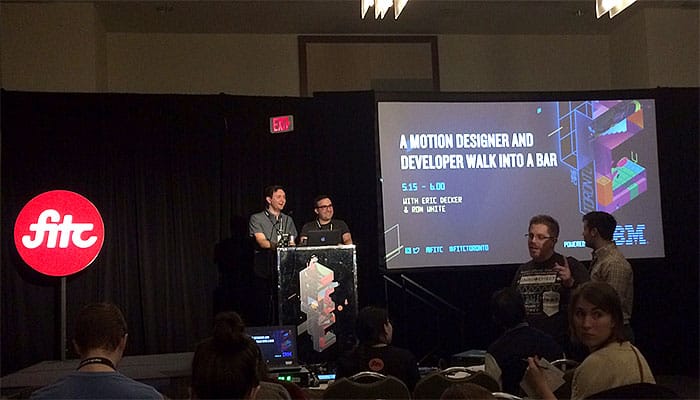
Don’t be an asshole, Out of the box, Realigning the way, Things imperfect and The door is always open were among the conference topics...