


Empowering Educators to Teach AI: A Look Back at Printemps numérique's Participation in AQUOPS 2026
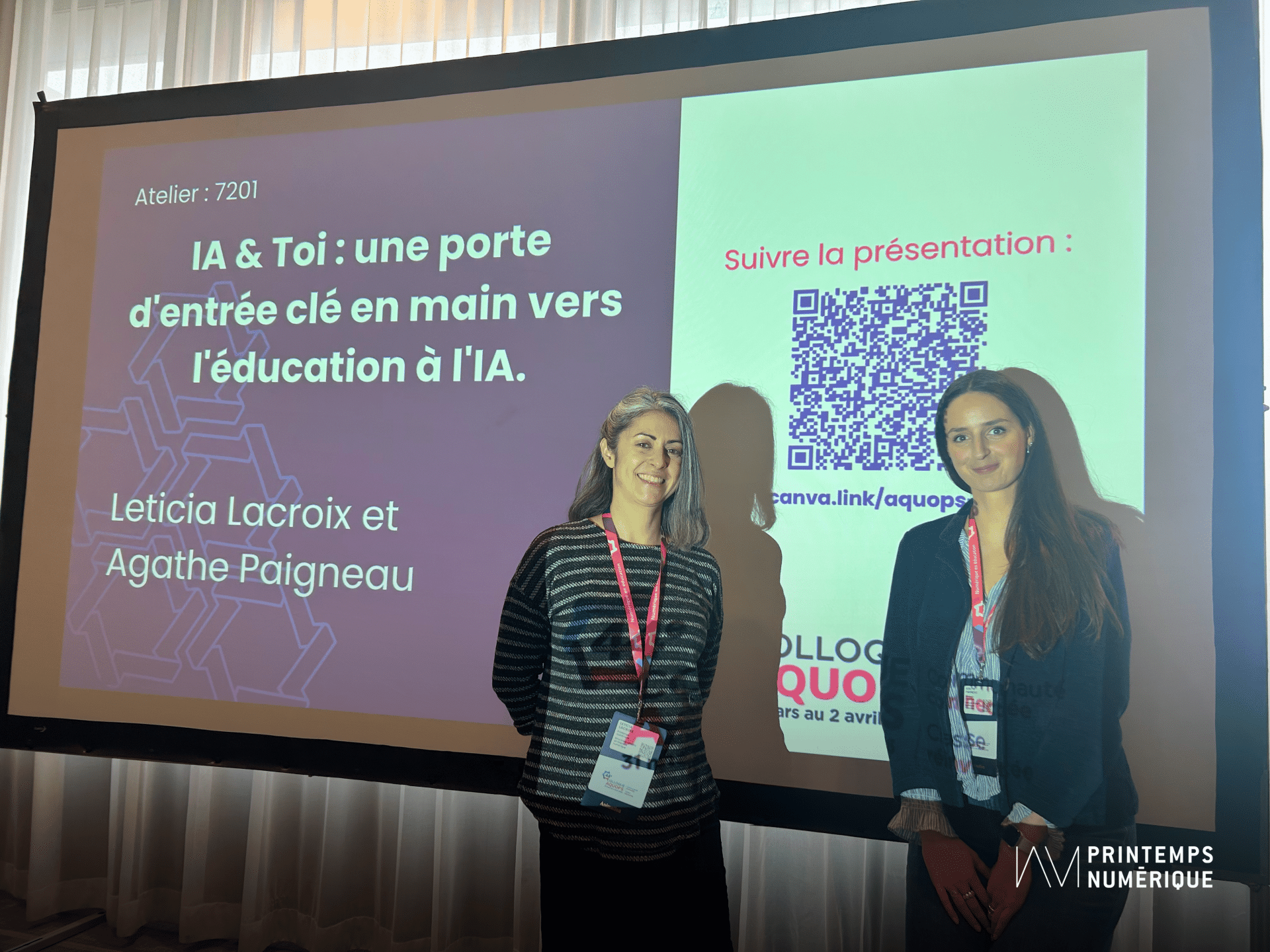

A Presentation to Equip Educators
Offered on the afternoon of April 1, the session addressed a central question: How can we teach artificial intelligence in a simple, practical, and responsible way?
Led by Agathe Paigneau and Leticia Lacroix, the presentation introduced IA & Toi, an AI education platform designed to help teenagers better understand artificial intelligence.
The goal was to help educators feel equipped, confident, and inspired to guide their students toward an informed and responsible understanding of AI.
Participants had the opportunity to:
- discover ready-to-use classroom activities;
- explore strategies for fostering critical thinking, creativity, and digital citizenship;
- learn how to integrate AI-related content into various subjects, including Quebec Culture and Citizenship (CCQ), computer science, social studies, French language arts, and more;
- access ready-made teaching resources, including lesson plans and activity sheets;
- leave with practical advice for facilitating ethical discussions about generative AI.
Hands-on Workshop: Your Turn!
Following the presentation, participants took part in an interactive workshop that invited them to put ideas into practice. The group consisted primarily of secondary school teachers, as well as pedagogical consultants and educational technology specialists.
Using the IA & Toi teaching resources, participants worked together to design a 60-minute classroom activity that they could implement with their students, transforming the platform’s content into engaging learning experiences. Through a collaborative approach, participants were able to:
- share effective teaching practices;
- adapt activities to different classroom contexts;
- develop a wide variety of practical and engaging lesson ideas.
They left with numerous strategies for initiating classroom discussions and introducing AI-related topics in an accessible and engaging way.
Sample Activities for Quebec Culture and Citizenship (CCQ)
- Exploring Cultural Realities: Using the question, “Why learn if AI can do everything?”, students examine different professions—such as teachers, influencers, carpenters, and software developers—to identify which tasks are being transformed by AI and which still rely on uniquely human skills. The activity concludes with a class discussion comparing students’ observations.
- Thinking Critically: Students analyze a series of videos to determine which ones were generated using AI. They first create their own checklist of clues for evaluating video authenticity, then compare it with the recommendations provided in the teaching guide to strengthen their ability to recognize misleading or AI-generated content.
An Accessible Approach to Responsible AI Education
Printemps numérique reaffirms the importance of making AI education accessible to all young people. Learning about AI also means learning to think critically, create responsibly, and make informed decisions in an increasingly digital world.
Bringing the Education Community Together
Participating in the AQUOPS conference also created valuable opportunities to connect with educators from across the education sector and generated strong interest in the IA & Toi resources.
The conversations and partnerships that emerged highlighted a growing need for support in integrating AI into classrooms in ways that are both structured and responsive to the realities of students and educators.
Interested in exploring the AI & You teaching resources or bringing AI & You to your school through a workshop, conference, or learning pathway?
Similar posts

Artificial Intelligence
read the article
Four New Members Join the Board of Directors of Printemps numérique
The board of directors of Printemps numérique unanimously appointed four new members at its meeting on October 22: Philippe Beaudoin of Element AI, Catalina Briceño of UQAM, Vincent Lauzon of Loto-Québec and Raff Paquin...
Digital Education
read the article
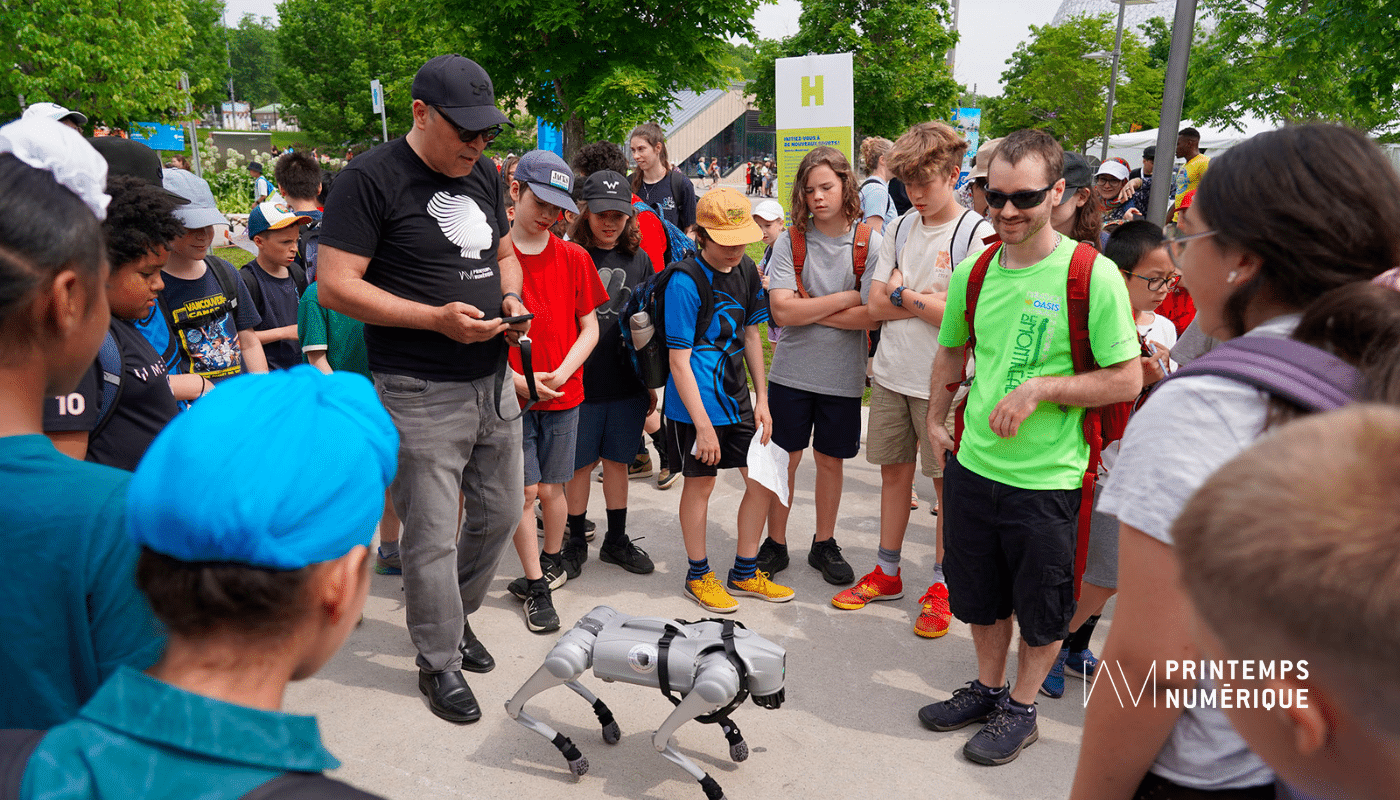
Recap of the 19th EURÊKA! Festival: Digital Spring Propels 'The Scientific Momentum'
Last June 5, 6, and 7, the Digital Spring team had the pleasure of hosting a Digital Café during the 19th edition of the EURÊKA! Festival, which took place at Parc Jean-Drapeau under the theme of 'The Scientific Momentum.' This event was an opportunity to invite the public to discover how science and technology, such as artificial intelligence, are concretely transforming the world of sports.