


The Past Meets the Present: Musée urbain Mtl
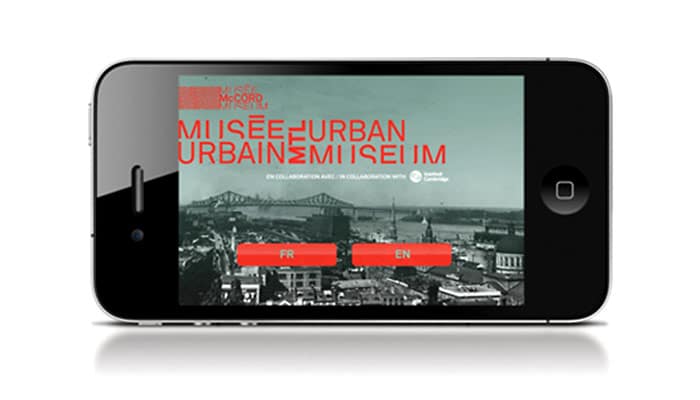
The Musée McCord proves that it is possible, and even beneficial, to use technology to remember and dust off the past in order to make it fully alive. As a bonus, we become tourists in our own city.
The institution showcases Montréal’s social history as represented by its people, craftspeople and communities. It celebrates life here, yesterday and today, and houses one of the largest historical collections in North America, made up of more than 1,400,000 artifacts.
Foryears, the museum has been watching what is happening in digitization, explains Sylvie Durand, director of programming at the Musée McCord. The team wanted to integrate a digital identity into its exhibitions. They keep an eye on new technology as it becomes an integral part of culture. The tangible object becomes refined and offers another vision. Ms. Durand notes that financial resources are needed to support digital projects that evolve quickly and are integrated in a complementary way with content, a recurring challenge for
museums.
Musée urbain
MTL is a successful example of this integration. The freeiPhone application, designed by the London agency Brothers and Sisters, will soon celebrate its third anniversary. It was launched at the same time as the permanent exhibition Montréal Points de vue.Montréal
[youtube id=”PdOLMZQvBwQ” width=”640″ height=”480″ autoplay=”no”]
becomes a museum. The application offers before-and-after views of nearly 150 places. The photographs, drawn from the Notman Photographic Archives collection between 1859 and 1973, were selected from more than one million photographs. They include Sainte-Catherine Street and its shops, Sherbrooke Street with its institutions and bourgeois homes, Mount Royal and its resort landscapes, Old Montréal and its markets, and the McGill University campus.
Musée urbain MTL uses the iPhone’s compass and GPS to offer two visions of the same place at once, using augmented reality, which superimposes in real time a virtual element—in this case, a period photograph—onto the real image seen in front of us through the device screen. Visitors can walk without a defined route,

following their strolls and noticing markers on the ground at recorded locations. They can access additional information such as the photograph title, date and a short description of the place.
According to Stéphanie Poisson, web and multimedia project manager, the museum once again wanted, through its mission, to move beyond its walls and bring a historical experience to life in Montréal. The aim is to celebrate the face of today’s city in an innovative way, while also reaching different audiences and meeting people in their daily lives. Open your eyes wide and walk through the city to discover it differently.

Similar posts
Culture and Creativity
read the article
Per Capita: Opening at Sight and Sound 2016
An important event in the digital underground scene, the Sight and Sound festival annually welcomes nationally and internationally recognized artists for a series of cultural activities. The...

Culture and Creativity
read the article
A Digital Café at Complexe Desjardins, in the Heart of Montréal!
Montréal, February 9, 2024 — From February 17 to 24, youth and the general public are invited to discover the possibilities of digital technology at a Digital Café at Complexe Desjardins, in the heart...